How to Master TikTok Ads: Everything We Learnt at the Take It To TikTok Seminar
TikTok has officially moved beyond being “just a social platform.” It’s where brands are built, demand is created and purchase decisions begin — often long before someone ever clicks a website.
But here’s the catch: most brands are still approaching TikTok like it’s Meta. Over-targeting. Over-editing. Over-polishing. And ultimately, overcomplicating.
At the Take It To TikTok seminar, one thing became clear — success on TikTok isn’t about hacking the algorithm. It’s about understanding behaviour. It’s about creative volume over creative perfection. It’s about building trust before pushing conversion. And most importantly, it’s about working with the platform instead of against it.
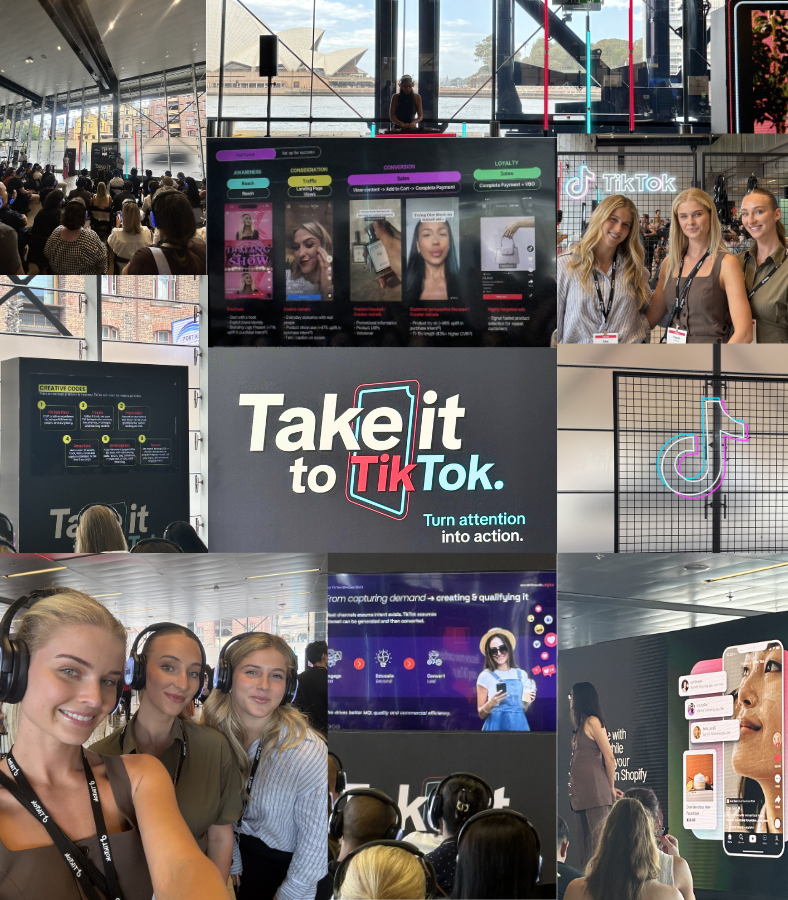
Here’s some of our key takeaways from this year’s Take It To TikTok Seminar.
Start Simple: Structure Wins
The foundation of success on TikTok starts with simplicity. When setting up campaigns in TikTok Ads Manager, the recommendation was clear: don’t overcomplicate it. Choose the right objective based on your KPI, build one campaign, create one ad group (one audience group), and launch with six to eight creatives.
Start broad. Use automatic targeting and let TikTok’s AI build your buyer persona instead of trying to control every detail yourself.
Many brands make the mistake of over-segmenting too early. TikTok’s algorithm needs room to learn — and that begins with a clean, simple setup.
Respect the Learning Phase
Every campaign enters a five to seven day learning phase. During this period, performance will fluctuate — and that’s completely normal. The key is not to panic.
Do not adjust budgets.
Do not constantly edit targeting.
Keep daily budgets steady.
If you interfere too early, you reset the learning phase and delay optimisation. After a few days of fluctuations, performance will stabilise. Patience is part of the strategy.

Budget & Scaling: Consistency Over Chaos
Budget discipline was another strong theme throughout the seminar. Consistency beats erratic scaling every time.
A recommended starting point discussed was around $3,000 per month to give campaigns enough data to perform. Once live, budgets should remain steady during learning, and scaling should happen gradually — no more than 50% increases every two to three days.
When your first ad group performs well, then introduce additional ad groups with new targeting approaches. Keep it structured. One targeting strategy per ad group keeps performance measurable and clean.
Creative Is the Real Targeting
If there’s one thing TikTok made crystal clear, it’s this: creative drives performance more than targeting ever will.
TikTok-first creative is non-negotiable. Ads must be built in 9:16 format, at least 10 seconds long, high resolution (minimum 720p), and designed for sound-on viewing. The platform rewards content that feels native, not overly polished or repurposed from other channels.
Your first three to six seconds need to act as a scroll-stopping hook. That hook must clearly connect to your core message. The body should educate, demonstrate or solve a problem. The close must include a strong call to action and clear branding.
Creative fatigue is real. Ads should be refreshed roughly every four weeks. Instead of relying on one hero ad, scale through volume. Aim for at least nine creatives per campaign. One strong asset can be recut, remixed and reimagined dozens of ways — swap audio, test new CTAs, change themes, and edit variations at ad group level.
On TikTok, quantity fuels scale.
Use TikTok’s Native Tools
TikTok has built powerful tools to help brands create and optimise at speed.
Tools like TikTok Symphony use AI to analyse thousands of content pieces and generate optimised variations from your existing assets — even resizing them to the correct specifications.
TikTok One connects brands to creators and production tools within one ecosystem, making collaboration seamless.
Meanwhile, TikTok Creative Center offers trend insights, keyword planning, and creative inspiration to guide your strategy.
If you’re not leveraging the platform’s built-in tools, you’re missing an advantage.
Understand the TikTok Customer Journey
TikTok users do not follow a traditional paid media journey.
The pathway looks more like:
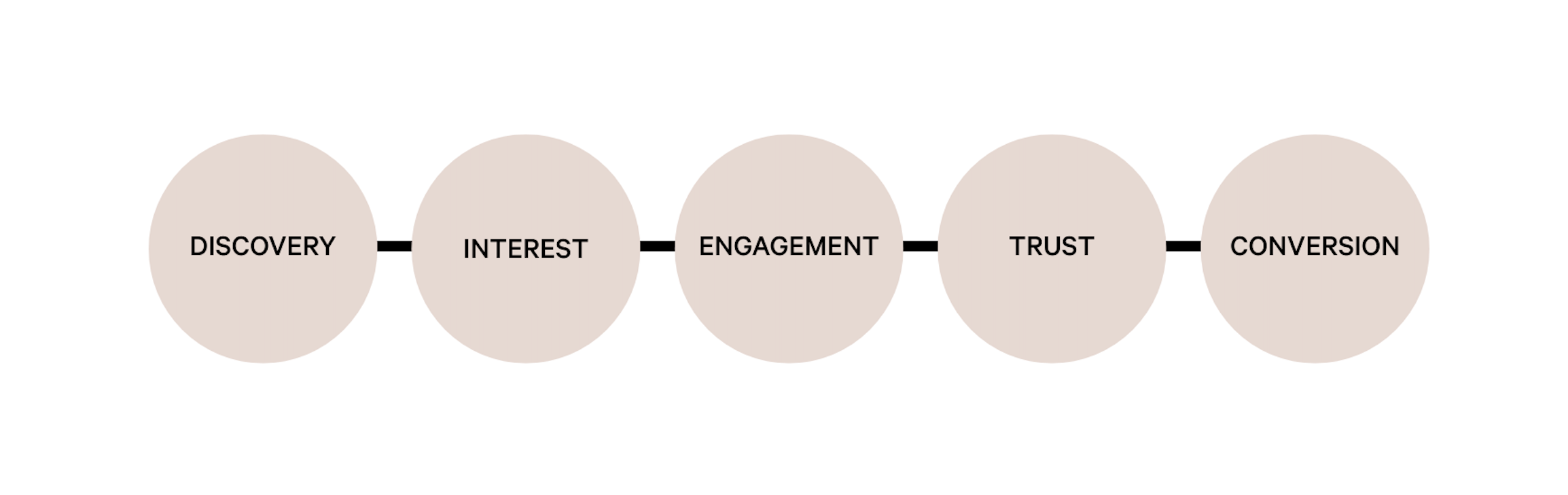
That means your content must engage, educate and qualify before it ever attempts to convert.
Highly educated leads are significantly easier to close. Demand creation builds trust. Address pricing, process and common objections early. Capture interest signals and nurture them properly.
Humanity builds credibility. Credibility builds intent.
What High-Performing Content Looks Like
The seminar highlighted content formats that consistently perform well on TikTok:
Founder POV storytelling.
Expert insights.
Myth versus truth breakdowns.
Step-by-step explainers.
Case studies.
Brands such as Hommey, Frank Green, Domaine Homes and Outcast were referenced as examples of brands leveraging strong storytelling and trust-building content to drive performance.
The common thread? Educational, engaging content that feels native to the feed.
The Biggest Mistakes to Avoid
Many brands struggle on TikTok because they treat it like Meta. They focus on vanity metrics instead of engagement signals. They scale too fast. They ignore creative fatigue. Or they fail to tie leads into a structured CRM process.
If you’re not tracking properly and following up with qualified leads, you’re leaking revenue.
Signal patterns matter. Engagement metrics tell you what’s resonating. Optimise accordingly.
The Bottom Line
Mastering TikTok Ads isn’t about hacking the algorithm. It’s about understanding platform culture.
Start simple. Let the system learn. Invest in creative volume. Educate before you convert. Track everything. Optimise with intention.
Create like a creator.
Think like a marketer.
Optimise like a performance team.
That’s how you win on TikTok.